


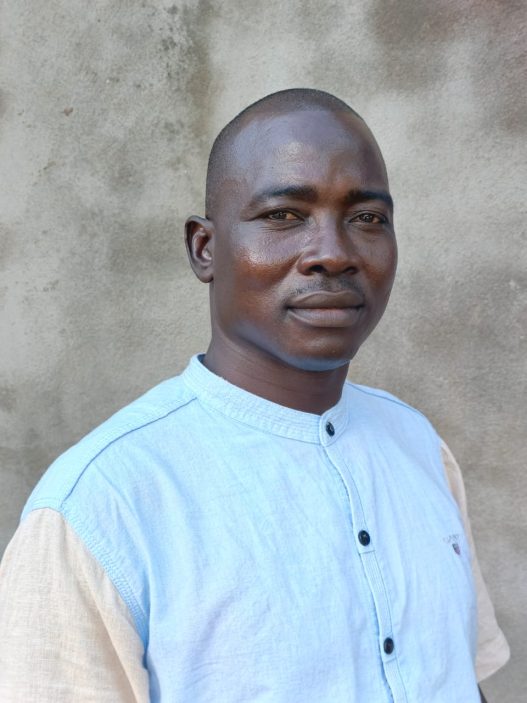
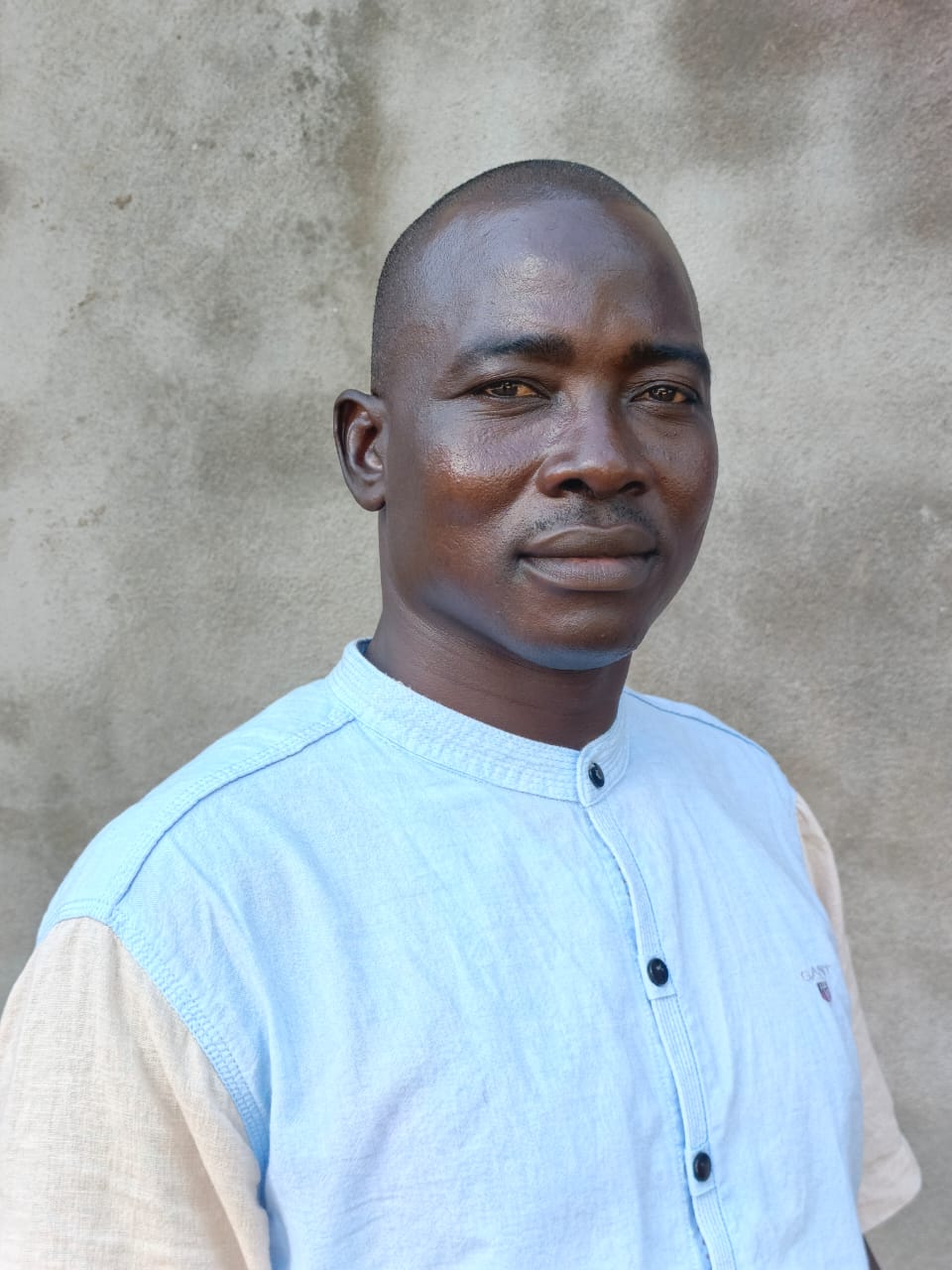
Jean Hissein grew up with a name that no one can quite pin down, and that is precisely why he has a story to tell.
In Moundou, a man answers to two different names depending on who is calling him. Muslims call him ‘Hissein’. And the Southerners call him “Jean”. Amidst laughter and confidences, he told us how a name given out of friendship, one evening during a birth in Bongor, has become the living embodiment of the Chad he dreams of seeing come to pass.
It’s cold, as it often is at this time of August in Moundou. The interview begins, however, in a light-hearted atmosphere: a firm handshake, a broad smile, a few jokes about the world of researchers who ‘always ask too many questions’. Jean Hissein settles in, relaxes and asks for a glass of tea before speaking. ‘I’m a “Bon Buzz” researcher, so I’m looking into the significance of names in relation to community life and solidarity amongst Chadians,’ we explain to him. Amused by the introduction, the discussion soon finds its rhythm: long, pensive silences, followed by bursts of laughter that lighten the atmosphere, then more serious moments when his voice becomes low and measured. You sense a man accustomed to telling his story but never tired of telling it. Every anecdote is punctuated by a smile, as if, years on, he were still savouring the quiet irony of bearing a name that everyone thinks they can guess but which no one ever quite gets right.
A friendship and a birth in Bongor
It all began long before his birth, with a friendship forged in the neighbourhood of Bongor between his father and a man from the North, a Gouran. Two ‘close’ friends, he points out, who shared everything: meals, plans, ideas about success. On the day his father’s wife gave birth, the friend announced, without beating about the bush: ‘Your child will bear my name. My name is Hissein, so he’ll take my name. ”
Out of loyalty to this friendship, his father abandoned the first name he’d chosen himself in his own language, “Tchitama”, to honour his friend. Meanwhile, his mother, a practising Catholic, presented the child at church. The priest added “Jean”. On the official birth certificate: Hissein Jean. The order would later be reversed, almost by administrative accident. Hissein Jean recounts: “My first job was with an American-based international organisation, where English-speaking convention dictates that the first name comes before the surname. That’s why, in the documents I received from them, it’s Jean Hissein, and it’s stayed that way to this day ”, he smiles.
He is keen to point out, with a wink, that his father’s famous friend is not the former president Hissein Habré: the coincidence of the first name often leads to confusion. “It’s another friend. He’s from the North and is simply a Gouran.”
Questions
Even back at school, his name was a source of curiosity. “But you’re from the South, you’re a Christian – how come you have a Muslim name?”, his classmates would regularly ask him. Jean Hissein has long had his answer ready, which he still gives today with the same calm conviction: “No, Hissein isn’t a Muslim name. Islam doesn’t have a name.”
Some even suggest he ‘correct’ his identity by adding a second, more traditional Christian first name: Jean-Pierre, Jean-Jacques, Jean de Dieu, to make things easier. He refuses, amused by their insistence: “I am 100 per cent Christian. If I go up north, I’m Hissein. If I go down south, I’m Jean.” A dual identity that he embraces as a matter of course rather than a source of embarrassment.
The name that brings people together
This is undoubtedly the anecdote that makes him smile the most. When he introduces himself as Hissein in certain circles, confusion quickly sets in: people mistake him for a ‘Hadjaraï’ (one of the communities located in the mountainous region of Guéra), a name with which he is often associated. Far from being annoyed by this, Jean Hissein recounts the scene: “The Hadjaraï brothers, convinced they are dealing with one of their own, naturally draw closer to me, chat with me, and regard me as a long-lost cousin”. One day, in a church, he sang in his own language. To everyone’s friendly astonishment, some sang along with him and claimed to have learnt the song. He had to clarify, with a smile, his true origins: “No, I’m not a Hadjaraï, I’m a Moussey from Kélo”. Far from dampening the relationship, the revelation only strengthened their bond: “The other brothers began to draw closer to me, saying that I was their brother”, he recalls, visibly moved by this spontaneous acceptance.
At church: “They’re afraid of a spy”
The most striking story from the interview, however, concerns Jean Hissein’s arrival at the Dombao Christian Assembly (a church located in a neighbourhood of Moundou), in the midst of the Covid-19 pandemic. Jean Hissein takes his time to choose his words carefully, as if he were reliving the scene. That day, a stranger with a Muslim-sounding name appeared amongst the congregation. Suspicion was immediate. “Even the church elders asked, ‘What on earth is this Muslim doing here?’”, he recalls. “A sense of fear set in.”
In the particular atmosphere of the pandemic, where every stranger arouses suspicion, some went so far as to suspect him of having come to spy on the congregation “like a secret intelligence agent”, he says, almost amused today by the scale of the misunderstanding. It took several introductions and several weeks of discreet, faithful attendance before the ice was truly broken. The turning point came one Sunday when Jean Hissein struck up a hymn in his mother tongue. “That’s when people said: ‘Ah, so that’s how it is’,” he says with a laugh. Mistrust turned to curiosity, then to a sense of belonging: the church eventually came to know and recognise him for what he really was – a Moussey from Kélo, a Christian all his life.
A burden that became a source of strength over time
His name also earned him, up north, other forms of attention – more teasing than threatening. “You’re our brother, but why do you add the Christian name?”, people sometimes whisper to him, half-serious, half-smiling, promising him fortune and success if he agreed to “become a Muslim” and give up the first name “Jean”. A good-natured ritual, which he takes in his stride: “I’ve found that this is a way for me to become a Muslim,” he remarks, preferring to see it as an affectionate game rather than genuine pressure.
When asked about the burden of carrying two identities at once, he carefully qualifies his answer: “As far as community integration is concerned, I don’t see a problem. ” The only burden he acknowledges is social, almost administrative: that of constantly having to explain himself, introduce himself and dispel doubts. But fundamentally, he wouldn’t change a thing: “I feel at ease with Christians; I feel at ease with my Muslim brothers.”
You have to live up to your name
Jean Hissein describes himself as a man who has long since made peace with his dual identity. For him, his name is not an anomaly to be corrected but a model to follow: “My name is an example of living together. When you have a name like that, you have to live up to it. ” He points out that the exchange of names between northern and southern Chad is nothing out of the ordinary — people from the south have names from the north, and people from the north have names from the south — and that this reality, far from being a problem, is a constant invitation to coexistence. With a smile, Jean Hissein stands up and offers his thanks in turn, almost surprised that people have taken the time to listen to a story which he considers, deep down, to be quite simple. But in today’s Chad, where names are sometimes seen as boundaries, Jean Hissein’s story reminds us of a truth that is all too often forgotten: a name can also be a bridge.
Mbaigoto Josué